|
In Dual Transformation, Scott Anthony, Clark Gilbert, and Mark Johnson propose a practical and sustainable approach to one of the greatest challenges facing leaders today: transforming your business in the face of imminent disruption. Dual Transformation shows you how your company can come out of a market shift stronger and more profitable, because the threat of disruption is also the greatest opportunity a leadership team will ever face. Disruptive change opens a window of opportunity to create massive new markets. It is the moment when a market also-ran can become a market leader. It is the moment when business legacies are created. Building on lessons from diverse companies, such as Adobe, Manila Water, and Netflix, and a case study from Gilbert’s firsthand experience transforming his own media and publishing company, Dual Transformation will guide executives through the journey of creating the next version of themselves, allowing them to own the future rather than be disrupted by it. |
LOD Picks
For your summer reads, the Learning and Organization Development Collection features books authored by thought leaders and subject matter experts who were resource speakers of various Ayala learning programs. Want to elevate your leadership skills or gain fresh insights on? Take your LOD Pick today.
Dual Transformation : How to Reposition Today's Business While Creating the Future
Hostage at the Table : How Leaders Can Overcome Conflict, Influence, Others, and Raise Performance
|
Conflict is a part of our everyday human behavior that stems from a basic fight-or-flight instinct. Too often, however, we believe that conflict is something that must be avoided at all costs; this tendency to suppress conflict can spark a cascade of negative emotions that eventually derail managers, leaders, and organizations. George Kohlrieser—an international leadership professor, consultant, and veteran hostage negotiator—explains that it is only by openly facing conflict that we can truly progress through the most difficult business challenges. In this provocative book, he reveals how the proven techniques and psychological insights used in hostage negotiation can be applied successfully to any personal or business relationship. Step by step, he outlines the seven key factors that anyone can use to remove the blocks that stand in the way of resolving tough problems, and he shows how business leaders in particular can develop and access the skills they need to create trust and a positive mind-set in their companies. |
 |
A recent study showed that when doctors tell heart patients they will die if they don't change their habits, only one in seven will be able to follow through successfully. Desire and motivation aren't enough: even when it's literally a matter of life or death, the ability to change remains maddeningly elusive. Given that the status quo is so potent, how can we change ourselves and our organizations? In Immunity to Change, authors Robert Kegan and Lisa Lahey show how our individual beliefs--along with the collective mind-sets in our organizations--combine to create a natural but powerful immunity to change. By revealing how this mechanism holds us back, Kegan and Lahey give us the keys to unlock our potential and finally move forward. And by pinpointing and uprooting our own immunities to change, we can bring our organizations forward with us. This persuasive and practical book, filled with hands-on diagnostics and compelling case studies, delivers the tools you need to overcome the forces of inertia and transform your life and your work. |
Judgement : How Winning Leaders Make Great Calls
 |
Noel Tichy and Warren Bennis have each spent decades studying and teaching leadership and advising top CEOs such as Jack Welch and Howard Schultz. Now, in their first collaboration, they offer a powerful framework for making tough calls when the stakes are high and the right path is far from obvious. They show how to recognize the critical moment before a judgment call, when swift and decisive action is essential, and also how to execute a decision after the call." "Whether you're running a small department or a global corporation, Judgment will give you a framework for evaluating any situation, making the call, and correcting if necessary during the execution phase. It will show you how to handle the overlapping domains of people, strategy, and crisis management. And it will help you teach your entire team to make the right call more often. |
Reorganize for Resilience : Putting Customers at the Center of Your Business
 |
In an era of raging commoditization and eroding profit margins, survival depends on resilience: staying one step ahead of your customers. Sure, most companies say they're "customer-focused," but they don't deliver solutions to customers' thorniest problems. Why? Because they're stymied by the rigid "silos" they're organized around. In Reorganize for Resilience, Ranjay Gulati reveals how resilient companies prosper both in good times and bad, driving growth and increasing profitability by immersing themselves in the lives of their customers. This book shows how resilient organizations cut through internal barriers that impede action, build bridges between warring divisions, and transform former competitors into collaborators. |
Rogue's Gallery : A History of Art and Its Dealers
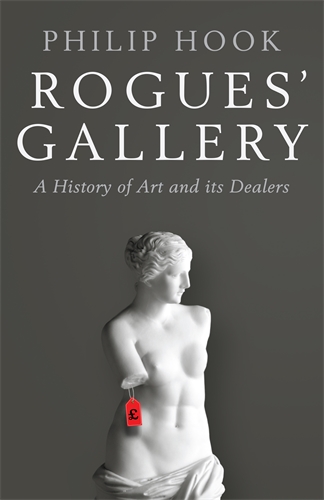 |
Philip Hook takes the lid off the world of art dealing to reveal the brilliance, cunning, greed and daring of its practitioners. In a richly anecdotal narrative he describes the rise and occasional fall of the extraordinary men and women who over the centuries have made it their business to sell art to kings, merchants, nobles, entrepreneurs and museums. From its beginnings in Antwerp, where paintings were sometimes sold by weight, to the rich hauteur of the contemporary gallery in London, Paris and New York, art dealing has been about identifying what is intangible but infinitely desirable, and then finding clients for whom it is irresistible. Those who have purveyed art for a living range from tailors, spies and the occasional anarchist to scholars, aristocrats, merchants and connoisseurs, each variously motivated by greed, belief in their own vision of art and its history, or simply the will to win.The cast of characters includes Paul Durand-Ruel, the Impressionists' champion; Herwath Walden, who first brought Modernism into the limelight; Daniel-Henry Kahnweiler, high priest of Cubism; Leo Castelli, dealer-midwife to Abstract Expressionism and Pop Art; and Peter Wilson, the charismatic Sotheby's chairman who made the auction room theatre.Philip Hook's history is one of human folly, greed and duplicity, interspersed with ingenuity, inspiration and acts of heroism. Rogues' Gallery is learned, witty and irresistibly readable. |
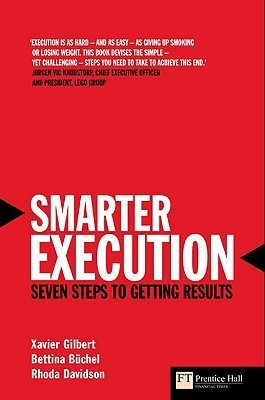
Smarter Execution : Seven Steps to Getting Results
|
|
Two strategic initiatives out of three fail. They are actually a huge challenge for "more-of-the-same, better-and-better," companies. Indeed, their cross-organization scope violates all principles of silo efficiency. Strategic initiatives are precisely not "more of the same." Smarter Execution identifies seven key steps that managers need to get to grips with if they are to reap the full benefits of their strategic initiatives: - Focus first - less is more - Pick the best possible team - don't compromise - Set the course - learn to navigate to a destination that is not yet fully defined - Set up to win - there is no "commitment switch" it starts with you - Think it through - rehearse mentally each next step, leaving no stone unturned - Get all aboard - it's about getting people to change the way they work - Follow through - to learn on the go The authors, Xavier Gilbert, Bettina Buchel, and Rhoda Davidson, have been working with several hundred executives to help them execute their strategic initiatives. Time and again, they have seen how these seemingly common-sense insights were actually unexpectedly difficult to apply in most "efficient" organizations" |
|
|
Powerful product, country, and functional silos are jeopardizing companies' marketing efforts. Because of silos, firms misallocate resources, send inconsistent messages to the marketplace, and fail to leverage scale economies and successes--all of which can threaten a company's survival. |