
The Ayala Way Vol. 4 No. 86
An Important Cultural Property
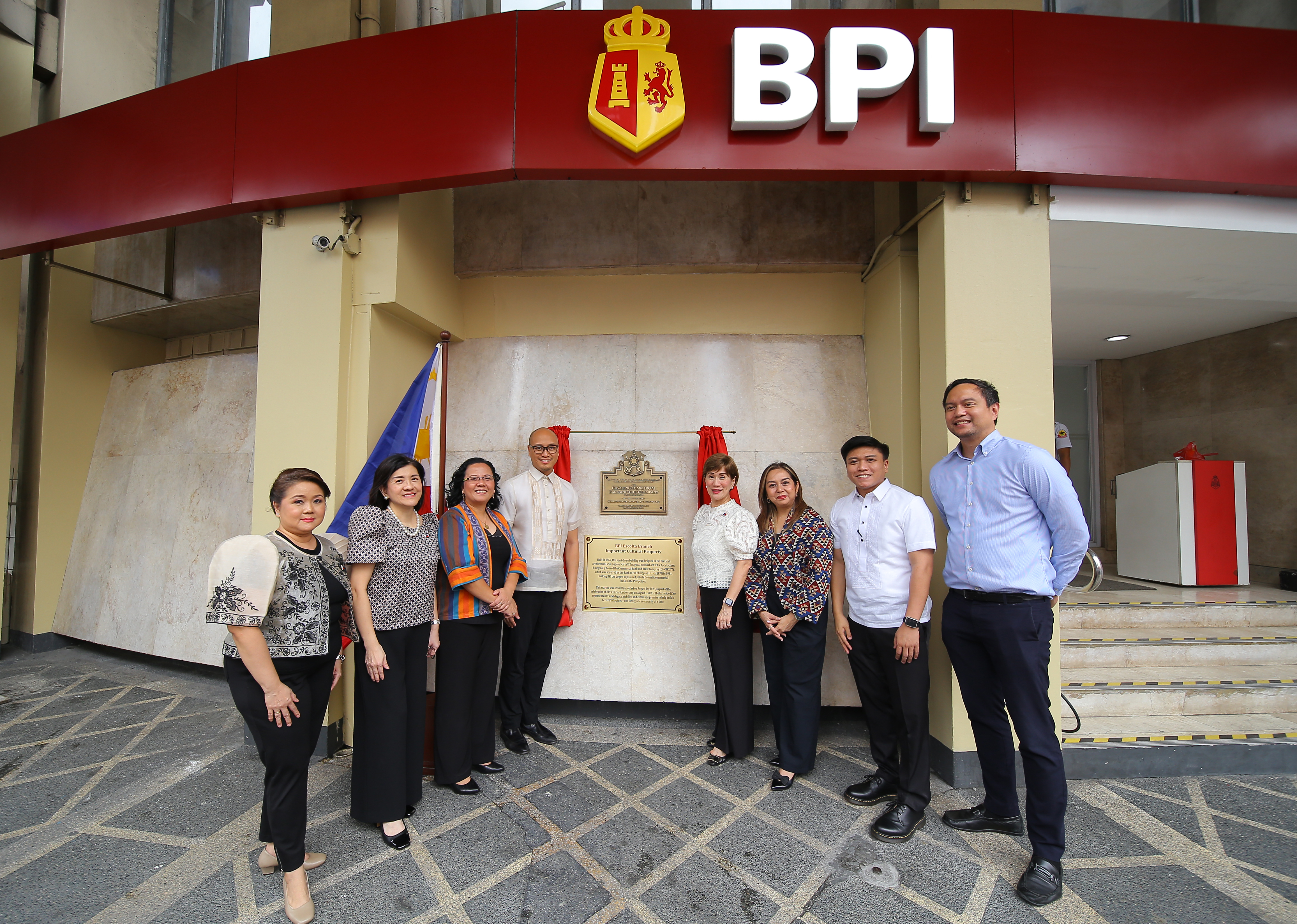
At the marker unveiling were (third and fourth from left) the National Museum’s Anne Rosette Crelencia and Jorell Legaspi; (fifth from left) BPI Branch Stores Channel Head Olga Ang; and (seventh from left) NCCA’s Joseph Patrick Lee, with BPI executives Cecilia Salazar, Sonia Braganza, Ana Liza Sta. Ana, and Carlo Poblete
The National Museum of the Philippines and the National Commission for Culture and the Arts (NCCA) installed an Important Cultural Property (ICP) marker at the Bank of the Philippine Islands (BPI) Escolta branch on August 30 to ensure the protection and preservation of the 54-year-old postwar edifice and formally establish its “exceptional cultural, artistic, and historical significance” to the country.
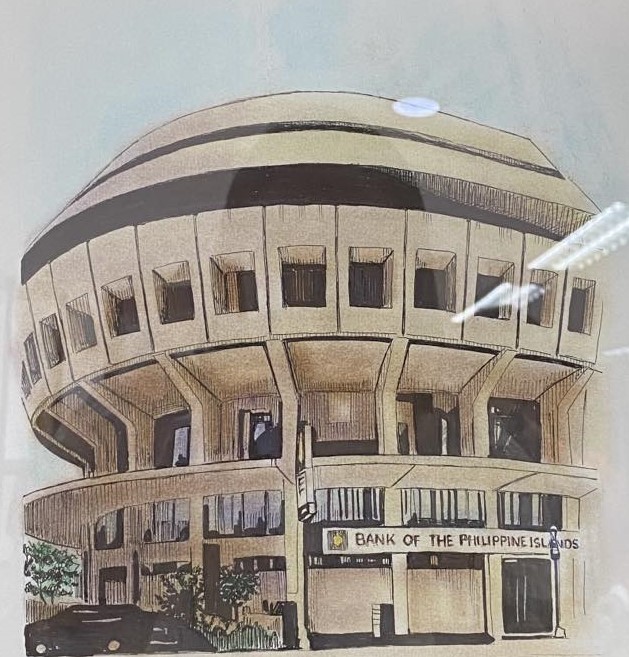
Located at Escolta corner Yuchengco Street in Manila, the half-dome, futuristic building was built in 1969 and designed with a brutalist architectural style by the late National Artist for Architecture Jose Maria V. Zaragoza. It housed the Commercial Bank and Trust Company (COMTRUST), a commercial bank established in 1954.
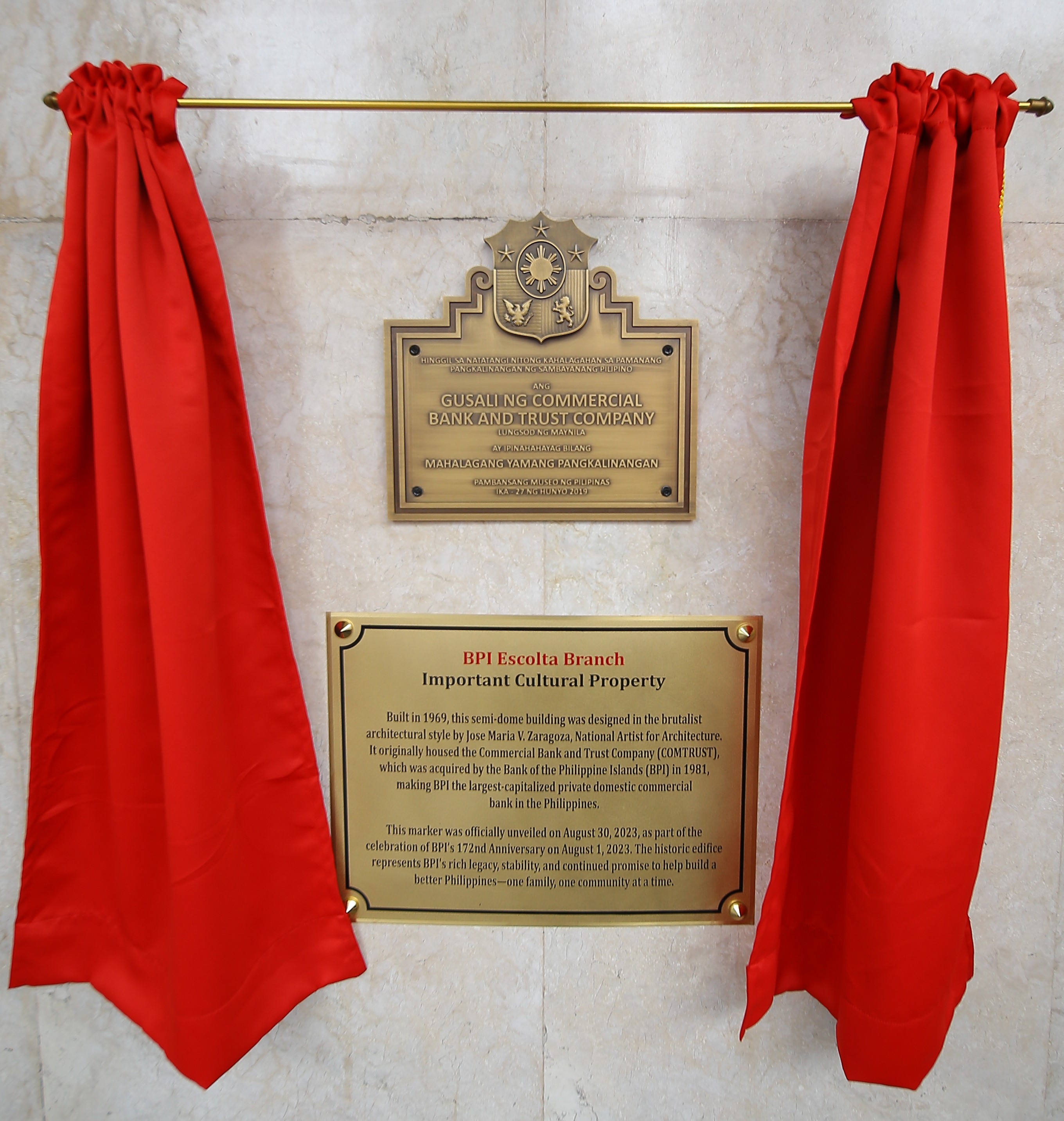
After acquiring COMTRUST in 1981, BPI became the largest-capitalized private domestic commercial bank in the Philippines. Newspapers referred to the merger as the biggest in local banking history at the time; BPI’s network expanded as it utilized COMTRUST branches’ strategic locations and strength in retail banking.
“As we celebrate 172 years of BPI, the inauguration of BPI Escolta branch as an Important Cultural Property reminds us of the cultural heritage and rich tradition that we share with the Filipino people,” said BPI Consumer Banking Head Ginbee Go. “While we honor our history by preserving important architectural branch structures, we are cognizant of the need to remain relevant and better serve our customers. Our digital transformation journey is our response to the changing landscape of banking in pursuit of our vision to build a better Philippines—one family, one community at a time.”
BPI Escolta, designed by National Artist Jose Maria Zaragoza, is the latest BPI branch to be recognized as a historical landmark; also bearing historical markers are BPI Escolta Sta. Cruz and BPI Cebu Main, built in 1894 and 1924, respectively.
About the author
Knowledge Management (1)
AC Knowledge Management is responsible for enterprise content management, archives management, and the development of knowledge products and services in Ayala. KM produces books on corporate history and business developments and publishes the groupwide internal communications channel, The Ayala Way.